
The Protein Glut and the Carb BoomCars, not people, are the corn hogs.
Posted Friday, Aug. 11, 2006, at 7:21 AM ET
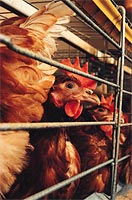 Atkins backlash?
Each year, Americans spend more on healthy food, diet books, and exercise equipment. And each year, Americans get heavier, which makes obesity treatment a growth industry. The logical investment thesis: Invest in an organic-foods company and in a chain of surgical centers specializing in liposuction.
When the Atkins diet was all the rage in the early part of this decade and millions of Americans shifted away from carbohydrates and toward proteins, there was another obvious paired trade: Buy the stock of protein-pushers like steakhouses and meat processors and sell the stock of carbohydrates machines like bakeries and pasta makers. After all, in 2004, carb-dependent companies rushed to use the Atkins excuse to explain poor results. By early 2005, the shift to protein was creating a chicken boom.
But in the last year, the balance of power between carbs and proteins has shifted, in part because of diets and in part because of global economic trends. As a result, there seems to be a glut of protein and a huge demand for corn and grain.
The July 31 earnings release from Tyson, the nation's biggest meat processor, tersely noted that "[o]versupply of proteins negatively impacted sales prices and operating results." Across the board, prices for its products were down sharply: 13.9 percent for chicken, 8 percent for beef, and 5.2 percent for pork. And thanks to higher energy and operating costs, the company lost money on its operations. The next day, No. 2 chicken processor Pilgrim's Pride likewise reported a loss. The culprit: too many chicken parts chasing too few mouths. O.B. Goolsby Jr., the company's chief executive officer, cited the "challenging protein environment seen in the first half of the fiscal year." In a set of illuminating charts, Pilgrim's Pride noted that consumption of all red meat and poultry fell 0.2 percent in 2005 and is projected to rise just 0.7 percent this year. Earlier this week, Gold Kist, a big chicken producer, similarly blamed its quarterly loss on "an oversupply of broilers and competing meats and low export sales prices." Here's the sad-looking one-year chart of Gold Kist, Tyson, and Pilgrim's Pride against the S&P 500. Meanwhile, the stock of steakhouse chain Morton's, a barometer for Americans' relative preference for beef, has performed poorly since its initial public offering earlier this year.
Overcapacity and fears of avian flu and mad-cow disease aren't the only factors hurting the profits of protein-based companies. They're being forced to swallow higher costs for energy and for their main input: the carbohydrates they use to fatten up chickens, pigs, and cattle. For in the last year, as the price of protein has plummeted, carbs have been enjoying a bull run. Check out these charts that track futures prices on corn, wheat, and soybeans at the Chicago Board of Trade during the last year. The trends for corn and wheat have been up significantly, while soybeans have fallen somewhat. That translates into thinner margins for protein companies. Gold Kist noted that for the nine months ended July 1, 2006, the average price of corn was 4.5 percent higher than in the previous year. Pilgrim's Pride noted that through the third quarter of the current fiscal year, the price it paid for corn was up 5.2 percent. And, according to this presentation (see Page 9 of the PDF), the U.S. Department of Agriculture and traders at the Chicago Board of Trade expect the price of corn to rise sharply in the coming year.
High crop prices are good news for the farmers who grow carbohydrates and for the companies that process them. ADM, one of the world's biggest processors of grains and oilseeds, just reported record annual results, with sales, margins, and profits all on the rise. Here's a one-year chart of ADM against the S&P 500.
But here's where the diet thesis breaks down: The prices of corn and grains aren't rising because people are consuming more to fuel their bodies. They're rising because people are consuming more carbohydrates to fuel their cars. Amid the investment boom surrounding alternative energy, a great deal of capital is flowing into ethanol, and corn is the main ingredient in ethanol. In its annual outlook, the Renewable Fuels Association noted that in 2005, ethanol production rose 17 percent to 4 billion gallons, more than double the 2001 total. In 2005, according to the National Corn Growers Association, 14.6 percent of corn production, or 1.575 billion bushels, went to produce ethanol. At the end of 2005, there were 29 refineries under construction with a combined annual capacity of 1.5 billion gallons. The ethanol boom has increased both demand—and hypothetical future demand—for corn and other biomass. Today, ethanol plants increasingly compete with protein-raisers to buy corn. To be sure, environmental factors such as weather and pestilence affect the price of corn, but the capital and excitement surrounding the ethanol market is also helping to push up the price of corn.
On Wall Street, protein is down and carbs are up. But it has less to do with what we're stuffing into our mouths than what we're funneling into our SUVs.
 PRINT
 DISCUSS
 E-MAIL


