Consumer News & Warnings
Free Phone calls !
Good consumer neews for a change ! Enjoy !The Wi-Fi in Your Handset
Illustration by The New York Times
By MATT RICHTELPublished: July 29, 2006
Skip to next paragraph
Multimedia
Graphic: One Phone, Two Ways to Connect
What if, instead of burning up minutes on your cellphone plan, you could make free or cheap calls over the wireless networks that allow Internet access in many coffee shops, airports and homes?
New phones coming on the market will allow just that.
Instead of relying on standard cellphone networks, the phones will make use of the anarchic global patchwork of so-called Wi-Fi hotspots. Other models will be able to switch easily between the two modes.
The phones, while a potential money-saver for consumers, could cause big problems for cellphone companies. They have invested billions in their nationwide networks of cell towers, and they could find that customers are bypassing them in favor of Wi-Fi connections. The struggling Bell operating companies could also suffer if the new phones accelerate the trend toward cheap Internet-based calling, reducing the need for a standard phone line in homes with wireless networks.
The spottiness of wireless Internet coverage means that for now, the phones will be more of a supplement to, rather than a replacement for, standard cellphone service. But dozens of American cities and towns are either building or considering wide-area wireless networks that would allow Wi-Fi phones to connect and make free or cheap calls.
“It’s a phone that looks, feels and acts like a cell phone, but it actually operates over the Wi-Fi network,” said Steve Howe, vice president of voice for EarthLink, which is building networks in Philadelphia and Anaheim, Calif.
Later this year it plans to introduce Wi-Fi phone service that Mr. Howe said could cost a fifth as much as traditional cell service.
The technology is in its early stages, and it faces some hurdles to widespread use. But it is being promoted by big technology companies like Cisco Systems and giving rise to new competition in the mobile phone business.
A handful of companies are already using Wi-Fi phones to cut costs within offices or on corporate campuses, and the phones will soon be reaching the consumer market.
Skype, the Internet calling service owned by eBay, said last week that four manufacturers plan to begin shipping Wi-Fi phones that are compatible with the service by the end of September. Among them is Netgear, a maker of networking equipment, which plans to charge $300 for its phone; the other makers include Belkin, Edge-Core and SMC.
Skype allows free calls to other Skype users and usually charges pennies a minute for calls to regular phones, although it has made all domestic calls free through the end of the year.
EarthLink plans to sell phones for $50 to $100, then charge roughly $25 a month for unlimited calling. Initially, the service will work only with hotspots where Internet access is provided by EarthLink, either in homes or on its citywide networks.
The major cellphone companies have taken notice of Wi-Fi phones, and some have chosen to deal with the potential threat by embracing it, building it into their business plans.
Cingular Wireless plans to introduce phones next year that will allow people to connect at home through their own wireless networks but switch to cell towers when out and about.
Later this year, T-Mobile plans to test a service that will allow its subscribers to switch seamlessly between connections to cellular towers and Wi-Fi hotspots, including those in homes and the more than 7,000 it controls in Starbucks outlets, airports and other locations, according to analysts with knowledge of the plans. The company hopes that moving mobile phone traffic off its network will allow it to offer cheaper service and steal customers from cell competitors and landline phone companies like AT&T.
“T-Mobile is interested in the replacement or displacement of landline minutes,” said Mark Bolger, director of marketing for T-Mobile. Wi-Fi calling “is one of the technologies that will help us deliver on that promise.”
Major phone manufacturers including Nokia, Samsung and Motorola are offering or plan to introduce phones designed for use on both traditional cell and Wi-Fi networks. Samsung said last week that it had begun to sell its dual-mode phone in Italy.
Wi-Fi not only has the potential to offer better voice quality than traditional cellular service, but it also opens the door to videoconferencing and other data services on mobile devices. Cellphone users are now often limited to the services offered by their carriers, but Wi-Fi phones could have access to a wider range of offerings on the Internet, in some cases at faster transmission speeds than on the carriers’ networks.
But there are enough limits to the technology that it may be some time before people start tossing out their old cellphones to take advantage of Wi-Fi.
The radio signals sent from standard mobile phones connect to tens of thousands of cell sites on towers or attached to buildings, billboards and other structures. These cells have an average range of two miles, allowing them to blanket much of the country.
Wi-Fi hotspots have a much more limited range, usually no more than 800 feet. Unlike the cellphone towers, which are operated by the carriers, the hotspots tend to be controlled by individuals or smaller companies, and are not coordinated or organized into a larger network.
“It’s going to be a long time before you’ll have a reliable Wi-Fi connection anywhere you go,” said Michael Jackson, director of operations for Skype.
A company called Fon, which is based in Spain and is backed by Skype and Google, is trying to accelerate the spread of Wi-Fi by selling cheap wireless routers to anyone who will agree to let other people in the vicinity use them by paying an access fee. The buyers can choose to split the fee with the company.
In October, Fon plans to begin charging about $150 for a wireless router that also serves as a docking station for a Skype-compatible Wi-Fi phone. The phone will connect easily to hotspots operated by Fon members.
“Wireless Internet infrastructure can be incredibly inexpensive,” said Martin Varsavsky, the founder and chief executive of Fon.
Without special software, like that from Fon, however, hotspots may not automatically set up a connection with the new phones. Instead, until the technology is smoothed out, users might have to configure their phones to connect whenever they are in range of a new hotspot.
“If it takes you five minutes to set up at the airport and you save 50 cents, why would you bother?” said Benoit Schillings, chief technology officer of Trolltech, an Oslo company developing software to make these connections easier.
Another wrinkle is that Wi-Fi networks operate over unlicensed radio spectrum. This spectrum is essentially public space, which means that anyone can make use of it, but it also means that the frequencies can be congested, potentially causing interference and dropped calls.
By contrast, the major cellphone carriers paid billions of dollars to the federal government for the right to use their slices of the radio spectrum. They can control who is on their networks, maintain quality standards and limit overcrowding. But the spectrum fees introduce a layer of costs that Wi-Fi calls are not burdened with.
Companies including Clearwire, founded by the cellphone pioneer Craig O. McCaw, are building subscribers-only wireless data networks using a technology called WiMax that has a much greater reach than Wi-Fi, and mobile phone service is part of their plans.
The hotspot technology has inspired a vigorous and complex discussion in the telecommunications world about how the traditional companies should react.
On its face, the technology would seem to present the carriers with a major problem. The more time subscribers spend connected to Wi-Fi hotspots, the less time and money they spend on the cell network.
Yet carriers also recognize that per-minute charges are falling across the industry, and that the loss of revenue they suffer if they allow people to switch onto a Wi-Fi network could be offset by attracting loyal subscribers who sometimes want to connect that way.
Further, some carriers argue that if people connect to Wi-Fi in their homes and offices, where there are close and reliable hotspots, they will enjoy connections that are better than those via cell towers and will not need standard phone lines. In a home, for example, the mobile phone could connect as effectively through Wi-Fi as traditional cordless phones do now to their base stations.
Larry Lang, general manager of the mobile wireless group at Cisco, said Wi-Fi would allow good service in people’s homes “without having to put up big cellphone towers in the neighborhood.” Cisco makes equipment that phone companies use to handle digitized calls.
Roger Entner, a telecommunications industry analyst with Ovum Research, said some carriers were still wary of Wi-Fi service. He said they were concerned that when hotspot reception was not good — whether at home or elsewhere — they would be blamed.
“The guys who don’t want it are predominately Verizon Wireless,” Mr. Entner said. They do not want a customer who is getting poor service at a hotspot “complaining that Verizon service is responsible,” he said.
A spokesman for Verizon Wireless, Jeff Nelson, said the company was looking at Wi-Fi service but had no plans to offer a product in this area. “At this point, we don’t see a great application for customers,” he said.
Further complicating the business discussion for the carriers are the incestuous ownership arrangements in the telecommunications world. For instance, Cingular Wireless is owned jointly by AT&T and BellSouth, while Verizon Wireless is part owned by Verizon Communications, the regional phone giant.
BellSouth, AT&T and Verizon Communications each have an interest in selling high-speed Internet access for homes and offices. If consumers have an incentive to set up wireless networks in their homes — networks that could be used for superior phone service — it could give them another reason to buy high-speed Internet access.
Of course, as many laptop users have discovered, Wi-Fi Internet access is not always something you pay for. Sometimes it is something you just find, as can be the case when people deliberately or unintentionally leave access points open and unsecured. The phones that work with Skype, and most likely others, will turn the free access point in a neighborhood café — or a neighbor’s house — into a miniature provider of phone service.
“It can be very open, decentralized,” said Mr. Entner of Ovum Research. But, he said, such a grass-roots infrastructure presents many challenges. For example, callers could get frustrated when the hotspot they are relying on for a connection stops working and there is no one to complain to.
Mr. Entner said, “You could knock on your neighbor’s door and say, ‘By the way, buddy, I’ve been bumming your Wi-Fi signal to make calls; please turn it back on.’ ”
John Markoff contributed reporting for this article.
Next Article in Technology (1 of 26) »
Infected Yoga Mats !!!
Yikes !!! - Be forewarned !!! Communal Yoga Mats: Beware of Germs
By ABBY ELLIN
Published: July 27, 2006
GREG E. COHEN, a podiatrist at Long Island College Hospital, hears the same story a lot: women complaining about a flaky red bump or a persistent itchy patch on a foot. By the time he sees them, they’re embarrassed and horrified. A few years ago, Dr. Cohen, who also has a private practice in Brooklyn Heights, didn’t know what to make of it, but these days he doesn’t blink an eye.
Skip to next paragraph 
Lars Klove for The New York Times

Getty Images
TREAD CAREFULLY Health clubs and gyms vary widely on the practice of cleaning yoga mats.
“The first thing I ask is, ‘Do you do yoga?’ ” he said. As often as not, the answer is a resounding “yes.”
In the last two years, Dr. Cohen said, he has seen a 50 percent spike in patients with athlete’s foot and plantar warts. The likely culprit? Unclean exercise mats, he said.
Gyms have long been hothouses for unwanted viruses, fungi and bacteria, a result of shared equipment, excessive sweat and moisture in locker rooms. Many facilities provide disinfectant so clients can wipe down machinery, but they are often less diligent when it comes to exercise mats. It’s common to see staff members clean a stationary bike. It’s rare to see them disinfect a mat.
This is starting to worry many yoga practitioners who go barefoot on high-traffic mats. Half a dozen kinds of yoga-mat wipes are now sold nationwide, and new products like hand and foot mitts, to protect serial mat borrowers, have hit the market.
Because yoga is more popular than ever, it could well be a coincidence that health-care professionals like Dr. Cohen are seeing more infections. In 2005, 16.5 million people practiced yoga nationwide, up 43 percent from 2002, according to Yoga Journal.
Research has not confirmed the link between unclean yoga mats and fungal, bacterial and viral infections better known as jock itch, plantar warts and staph infections. Nor can dermatologists and podiatrists conclusively trace these ailments to dirty yoga mats.
Still, some are making unofficial connections. A handful of dermatologists and podiatrists say that in the last two years or so they have noticed a rise in the number of skin infections in their patients who practice yoga and use public mats.
“Most people know to wear flip-flops in the shower and locker rooms but they don’t think about it on a yoga mat,” said Noreen Oswell, the chairwoman of podiatric surgery at Cedars-Sinai Medical Center in Los Angeles. In the last two years, Dr. Oswell said there has been an uptick of fungal infections among her patients who use mats that aren’t properly cleaned.
Dr. Ellen Marmur, who runs the division of dermatologic surgery at the Mount Sinai Medical Center in Manhattan, said she has seen more bacterial infections in the last year and a half in “young women who mentioned they did yoga and Pilates,’’ and for whom she had ruled out other risk factors for dermatitis or dry, itchy skin. Dirty exercise mats were most likely to blame, Dr. Marmur said.
Washing dozens of mats regularly can be laborious and costly, which is why Jen Lobo, an owner of Bikram Yoga NYC, raised her rental price to $5 a mat from $2.
“Every night we clean the mats with an antibacterial yoga spray” and hang them to dry, Ms. Lobo said. “Weekends, we put them in the washing machines with Dr. Bronner’s Soap. It’s a lot of manual labor.”
Many facilities encourage practitioners to buy their own mat or put the onus on members to clean them. For instance, Sports Club/LA gyms provide wipes outside classrooms for patrons. Most Gold’s Gyms offer antiseptic solutions for yogis.
Representatives at most of the 10 gyms and studios that a reporter called nationwide said that they aim to clean mats thoroughly once a week.
Some chains like Crunch Fitness had more ambitious policies, but little oversight. “The goal is to wash mats once a day,” said Amy Strathern, a spokeswoman. Does that happen? “I don’t know,” she admitted. “It’s up to the general manager of each gym to make sure it’s done properly.”
Among chains, compliance sometimes varies from club to club. Carol Espel, the national director of group fitness for Equinox Fitness, said that mats are wiped with a citrus-based disinfectant every other day and machine-washed twice a month.
But a group fitness manager at a branch of Equinox Fitness in Manhattan, who was granted anonymity because he feared losing his job, said that mats were machine-washed only “every two months” and wiped down in between. On the other hand, George Smith, maintenance manager at the Greenwich Avenue outpost, followed Equinox’s policy more closely. Mr. Smith said mats were disinfected in a machine weekly and wiped down three times a week.
Critics warn that hygiene isn’t always a priority at some gyms and studios. Heather Stephenson, a Brooklyn yoga teacher who has worked for two gyms and has worked out in more than 25 worldwide, said: “In my experience it is not an incredibly regular practice to clean them.” Ms. Stephenson, who is a founder of Idealbite.com, an eco-living Web site, added that blankets, which are used for headstands, “aren’t often cleaned, either.”
Some specialists also worry that the cleaning solutions are not as effective as they could be. In order for a mat wipe to work, the liquid needs to have alcohol or quat-based disinfectants that are commonly used in detergents, said Dr. Philip Tierno, the director of clinical microbiology at N.Y.U. Medical Center. The wipe also needs to be moist enough to wet the entire surface. Soap and water won’t kill bacteria, but chlorine will, added Dr. Tierno, the author of the book “The Secret Life of Germs.”
Longtime devotees of yoga tend to buy their own mats and don’t lend them to anyone because they consider them an intimate part of their practice. It’s what Robert Butera, editor in chief of Yoga Living magazine, calls yoga hygiene. Cleaning one’s mat is about “being self-reliant and improving your health any way you can,” he said.
Drop-ins and relative newcomers who use communal mats take the biggest risks. Robin Parkinson, a marketing executive in Los Angeles, began doing yoga at Equinox in Westwood about six months ago. She used the mats provided because she never saw a need to buy her own. “I don’t have a horse, either, and I ride,” Ms. Parkinson said.
One day she noticed a scaly red patch of skin on her right arm. It began to itch. And when her left leg and inner thighs also started itching, she went to four doctors because no one seemed to know what was wrong. At last, one gave her cortisone cream and told her to stop borrowing yoga mats. “I haven’t gone onto a public mat since,” she said.
For two years, Darby Friedlis used loaner mats from Bikram Yoga East in Midtown Manhattan, where she practiced hot yoga. Then she got a nasty surprise when she went for her monthly pedicure. “The manicurist took one look at my foot, which was itchy and a little flaky, and cried, ‘You have athlete’s foot!’ ” said Ms. Friedlis, a 25-year-old publicist in Manhattan. Her father, a doctor who specializes in pain treatment in Fairfax, Va., was the one to suggest that unclean yoga mats might be the source of her problem.
While a wart or fungus between their toes may dismay yogis, such ailments won’t kill them. “Athlete’s foot is not exactly a life-threatening disease,” said Dr. Timothy McCall, the medical editor for Yoga Journal. “And plantar warts and athlete’s foot are so common. You could make yourself crazy with this stuff.”
That hasn’t stopped entrepreneurial yogis from rolling out products to combat the hygiene problem. Judy Alley from Scottsdale, Ariz., created hand and foot mitts called Yoga Grip Gloves, after an especially unpleasant class four years ago. “The first time I got down on the mat I was disgusted,” Ms. Alley said. “I wanted to wear my shoes but they said ‘No.’ ”
Before starting a cleaning-products line six months ago, Selena Stirlen visited 20 yoga studios nationwide and asked about cleaning practices. Their response disgusted her. “A lot of studios can’t afford a cleansing product, and they only do a major wash in the machine twice a year,” said Ms. Stirlen, who now sells wipes for on-the-go hygiene as well as a spray and machine detergent.
Not everyone is impressed. Heather Schlegel, who has practiced Bikram yoga for three years, once bought a Jo-Sha Wipe, another moist towelette made for mat cleaning. “I tried wiping down my mat, but the unfolded square was too small and kept getting scrunched up as I rubbed it across,” she said of the 75-cent wipe. “It didn’t look particularly cleaner when I was finished.”
As for Ms. Friedlis, she stopped yoga after curing her athlete’s foot with an over-the-counter cream. “Now I do the elliptical or the treadmill,” she said. “Things where I have shoes on.”
Coffee: Good for you
Lots of health news today. Most of it good, for a change. Enjoy, and be forewarned.
medical examiner: Health and medicine explained.
Your Health This Month
Why to drink lots of coffee, whether acupuncture works, and more.
By Sydney SpieselPosted Tuesday, July 25, 2006, at 1:26 PM ET Listen to the author reading this story here, or sign up for Slate's free daily podcast on iTunes.
This month, Dr. Sydney Spiesel discusses the benefits of drinking coffee, a great new way to prevent infant anemia, whether acupuncture works, lightning and cell phones, and the link between depression and heart disease. (Click here and here for the last two columns.)
Coffee: Drink more.
Effects: As I write this, I am savoring an especially enjoyable cup of coffee, made so by the knowledge that sipping it may decrease my risk of developing adult-onset diabetes (though, sadly, the slab of gooseberry pie I ate a few minutes earlier almost certainly neutralized the beneficial effect). Coffee is one of the most widely consumed beverages in the world. We like its taste and, even more, its pharmacological effects, including an increased sense of alertness and ability to counteract sleepiness. Medically, coffee's most important active ingredient, caffeine, has only a few uses: It helps some headache sufferers, and it's sometimes administered to infants (especially premature ones) who need to be pharmacologically "reminded" to keep breathing. Other effects of caffeine are not so benign. It acts on the kidneys as a diuretic and can cause jitteriness, rapid heart rate, and loose stools. Extremely large doses can cause seizures and—extremely rarely—death.

Antioxidants: Coffee ought to be beneficial by virtue of its high content of antioxidants, natural chemicals that bind and neutralize a group of unstable materials in body cells that, among other things, damage DNA, causing the effects of aging and the cellular changes that lead to cancer. Coffee contains more of these antioxidants than green tea and red wine. Sadly, it's been hard to absolutely demonstrate the value of the antioxidant properties of these beverages, though most of us doctors believe in them anyway.
Diabetes: The association between coffee-drinking and reduced risk of adult-onset diabetes, on the other hand, has now been well-established by a number of studies that followed many, many patients in a wide variety of geographical locations. Often, in big epidemiological studies, one can't tell whether the observed association is the result of causation—drinking coffee protects against diabetes—or of two loosely related phenomena. Imagine, for example, that people with heavier, diabetes-prone bodies might find undesirable a beverage that's a stimulant and mildly diuretic. Still, the coffee studies add up: If many studies produce similar findings after drawing from diverse populations and taking care to rule out other, coincidental, factors as causes, it becomes increasingly likely that we are dealing with causation, not mere association. In addition, a dose-response curve—the more coffee drunk, the less diabetes risk—adds a lot to the causation argument.
New findings: That is what we have for coffee-drinking and diabetes risk. I counted more than seven good studies reporting that reduced diabetes is associated with coffee-drinking. The most recent, a study by Mark Pereira, Emily Parker, and Aaron Folsom of the University of Minnesota, followed more than 28,000 post-menopausal women over 11 years. The research team found an almost linear decrease in the risk of developing diabetes based on how much coffee their subjects drank on average. Women who drank six or more cups a day showed the most benefit. An earlier study conducted in Finland, which has the highest per-capita consumption of coffee in the world, found the effect especially beneficial for the 16 percent of the study population who drank 10 or more cups a day. Interestingly, the new study showed that the beneficial effect could not have been due to caffeine, magnesium, or phytic acid—each of which previously had been suspected of playing a role. Actually, decaffeinated coffee does more to decrease the risk of diabetes than the high-octane version. And the Finland study found that filtered coffee was more effective than boiled.
So, though we still have no idea of what in coffee protects against developing diabetes, the drink looks like that rarity: something you desire that might be good for you.
Anemia: An assist from the umbilical cord.
Iron deficiency: You have to love a simple intervention that promises to improve the lives of many patients. Camilla Chaparro, Kathryn Dewey, and their colleagues at the University of California at Davis, the Mexican National Institute of Public Health, and the Luis Castelazo Ayala Hospital in Mexico City have given us just such a prize in a paper published in the Lancet. In developing countries perhaps half of all children become anemic by their first birthday. The cause is usually iron deficiency, related to maternal iron deficiency, maternal blood loss associated with childbirth, or early infant feeding practices using iron-poor formula or foods. The deficiency often worsens with time because of the chronic blood loss associated with many intestinal worms that infest children in the tropics, and because poor families can't afford much meat. There is some disagreement in the scientific literature, but many experts believe that anemia in early childhood has negative—and perhaps irreversible—effects on development.
The fix: Chaparro and her colleagues tested the effects on iron levels in infants of delaying the clamping of the umbilical cord until two minutes after birth. Following more than 350 infants, the researchers found that a two-minute delay (which allowed the return of about 4 ounces of the baby's blood that's temporarily held in the placenta and cord vessels) led to a substantial decrease in anemia at 6 months. The intervention was most effective for babies at greatest risk: those born to iron-deficient mothers, with low birth-weights, or who don't get iron-fortified formula.
The usual practice: The usual practice of clamping the cord right away (an average of about 17 seconds after birth in Mexico City) is standard hospital practice everywhere. The idea is that quickly clamping and cutting the cord will make it easier to attend quickly to the needs of both newborn and mother. In addition, hospitals can finish labor and delivery faster, which has some institutional advantage. And it is sometimes argued that the extra increment of blood produced by delayed cord clamping might cause the baby to wind up with too much blood in his system, increasing circulatory difficulties and the risk of jaundice. But this study did not encounter either adverse effect.
In short: an easy, free, safe intervention that is likely to give a leg up to newborns in developing countries. What more could one ask for?
Acupuncture: Of pains and needles.
Complementary therapies: Acupuncture, nutritional supplements, homeopathy, and naturopathy seem to many to offer safer, less invasive, more "natural" ways to deal with bodily woes than conventional medicine. They appeal to the desire for the spiritual and the mysterious. They may be less expensive. Their practitioners are often warmer and less pressed for time; they appear to pay attention to our whole selves and not just the broken parts. And some patients relish the increased autonomy: Instead of asking your doctor for a prescription, you can reach for a bottle of pills in the vitamin department of the supermarket.
The question: Do these treatments work? Sometimes yes and sometimes no. And sometimes for reasons practitioners don't anticipate. A particularly good example comes from a study reported recently in the Annals of Internal Medicine, conducted at the Universities of Heidelberg and Bochum in Germany by Hanns-Peter Scharf and his colleagues. The purpose was to help German insurers decide whether to pay for acupuncture, a practice of Chinese traditional medicine in which tiny needles are inserted to a shallow depth at specific locations in the skin.
The ailment: The researchers focused on acupuncture for osteoarthritis of the knee, a painful and debilitating joint inflammation that results from wear and tear in aging joints. It occurs in the majority of people by age 65, and in 80 percent by age 75. The knee is the most commonly affected joint. There is no cure. The standard treatment is anti-inflammatory drugs, which have their own risks; pain medication; and physical therapy. Ultimately, many sufferers have surgery, in which the damaged and painful knee joint is replaced with an artificial substitute.
The new study: Previously, some studies have shown the benefit of acupuncture for osteoarthritis of the knee, and others have not. For this study, Scharf and his colleagues looked at about 1,000 patients. The patients were divided into three groups. One group was treated with acupuncture. A second "sham acupuncture group" was treated with needles placed in locations that don't match those specified by traditional Chinese medicine. A third group received no needle treatments at all. All the patients had identical access to physical therapy and nonsteroidal anti-inflammatory medications. After 26 weeks, the subjects were all interviewed by people who didn't know which treatment they had received. The treatment was regarded as successful only if there was a 36 percent or higher improvement in knee function or pain relief.
The results: Acupuncture was clearly associated with improved function and pain relief. But it didn't much matter whether the treatment followed traditional Chinese medicine methods or consisted of needles placed in the wrong locations—both worked equally well. It is tempting to think that the physical act of placing needles caused the improvement, and that may well be the case. But there was another significant factor: The patients who got no needle treatment had substantially less contact with their doctors than the acupuncture patients, sham and real, had with their practitioners.
Conclusion: Should the German insurers pay for this complementary treatment? Well, without acupuncture, the patients in Scharf's study needed more physical therapy, more pain-killing medication, and more anti-inflammatory drugs. I sure wish I knew, though, what would happen if patients were treated without acupuncture but given more attention and care by their doctors.
Lightning and cell phones: Don't mix them.
The scare: A few weeks ago, the news was full of stories about the dangers of being struck by lightning while talking on your cell phone. Soon after, the press rescinded the warnings. Why? The original case report, described in a letter by three English ear, nose, and throat specialists to the medical journal BMJ, described a 15-year-old girl struck by lightning while talking on her cell phone in a London park during a storm. She was successfully resuscitated following a cardiac arrest, but a year later still suffered serious aftereffects (from the lightning strike? from the cardiac arrest?). The authors attributed the injury to the effect of a metallic conductor that had had contact with the skin and redirected the flow of lightning electricity from the surface of the skin to cause internal injury.
The physics: But the enormous electrical current of a lightning strike doesn't pass through the body (if it did, the resulting explosion would be impressive indeed). Instead, the electricity travels between cloud and earth along a highly conductive path of ionized air. When a conductor (that is, you or I) is near a field generated by a lightning bolt, electrical currents are induced in the conductor that can badly, even lethally, disrupt the nerve impulses that control the rhythm of the heart or the workings of the brain. But that is not the result of lightning electricity diverted into the body by a piece of metal near the skin. If metal acted as such a point of contact, we would see deep internal burns originating at metal jewelry or watches worn by people who are struck. We don't (though there is some danger of localized burns). Cell phones are mostly plastic and don't have much metal in them. So, the authors' idea that the phones are good conductors for diverting the lightning's current into a victim is especially implausible. After the initial scare letter, the BMJ published two letters written by people with substantially more technical knowledge who showed that the threat was spurious.
The problem: The medical journal editors should have thought to test the claim about the 15-year-old against what is known about the physics of lightning. And the media should have covered the correction with the same gusto it did the anxiety-provoking initial claim. Burying the correction increases our perception of the world as dangerous and misdirects our thinking away from the important questions about new technology (like its effects on our lives) toward nonexistent risks.
Conclusion: Is there any risk in using a cell phone in a thunderstorm? Actually, I suspect there is—the same danger as using it while driving: We become focused on the phone conversation and lose track of hazards. Which, in the case of lightning, means forgetting to seek shelter. That is probably the real lesson of the strike that injured the teenager in London.
Depression and heart disease: Will treating one help the other?
The new findings: There is no doubt that a powerful relationship exists between depression and heart disease, as demonstrated most recently in a study of more than 7,500 elderly women conducted by a research group under the direction of Mary A. Whooley of the San Francisco Department of Veterans Affairs Medical Center. The women were followed for seven years. During that time, only 7 percent of those with no depressive symptoms died, compared with 17 percent of women with three to five depressive symptoms, and 24 percent of those with six or more symptoms. The increased mortality was due to cardiovascular disease and some other conditions (chronic lung disease, pneumonia, accidents, and trauma), but not to cancer. Results like these have been replicated many times. Other studies show that depression also significantly worsens the prognosis for patients who already have coronary artery disease, making them 70 percent more likely to die.
The unknowns: You'd expect the symptoms that often go along with cardiac disease—decreased tolerance for exercise, pain on exertion, a general feeling of weakness and ill health—to be quite capable of causing depression. However, it looks as if the depression usually precedes the heart disease and not the other way around. And as yet, there is no clear and unequivocal answer to explain the association. It is not even known whether the cause is more to be blamed on the behaviors that often accompany depressive feelings or on some biological factors that are caused by or at least related to depression.
Possible biological factors: Depressed people often have a higher resting heart rate, a higher level of the hormones that control blood pressure and heart rate, and a higher level of platelets (the blood elements that start the cascade leading to the formation of blood clots).
Possible behavioral effects: Depressed people are more likely to smoke, eat badly, exercise less, and fail to take medication. All of these factors, biological and behavioral, might well play a role in the relationship between depression and cardiovascular disease.
Conclusion: If we treat depression, can we help prevent cardiovascular disease and the increased risk of dying? Unfortunately, we don't know. But Dr. Whooley makes a strong case for identifying and treating depression in patients with cardiovascular disease, perhaps to help their cardiac health, and certainly to improve their quality of life.
Sydney Spiesel is a pediatrician in Woodbridge, Conn., and associate clinical professor of pediatrics at Yale University's School of Medicine. Photograph of spilled coffee beans on the Slate home page by Spike Mafford.
Join the Fray: our reader discussion forum
What did you think of this article?
The Long (& Wrong) Tail
This theory needs wider disemination. Pass it on. books: Reading between the lines.
The Wrong Tail
How to turn a powerful idea into a dubious theory of everything.
By Tim WuPosted Friday, July 21, 2006, at 6:19 AM ET Chris Anderson's The Long Tail does something that only the best books do—uncovers a phenomenon that's undeniably going on and makes clear sense of it. Anderson, the Wired editor-in-chief who first wrote about the Long Tail concept in 2004, had two moments of genius: He visualized the demand for certain products as a "power curve," and he came up with a catchy phrase to go with his observation. Like most good ideas, the Long Tail attaches to your mind and gets stuck there. Everything you take in—cult blogs, alternative music, festival films—starts looking like the Long Tail in action. But that's also the problem. The Long Tail theory is so catchy it can overgrow its useful boundaries. Unfortunately, Anderson's book exacerbates this problem. When you put it down, there's one question you won't be able to answer: When, exactly, doesn't the Long Tail matter?
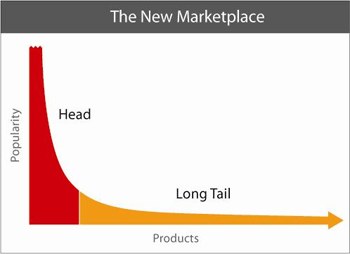
The graph below is the Long Tail in a nutshell.
This image accurately describes the demand for cultural products. In most entertainment industries (films, music, books, etc.) a few hits make most of the money, and demand drops off quickly thereafter. Demand, however, doesn't drop to zero. The products in the Long Tail are less popular in a mass sense, but still popular in a niche sense. What that means is that some businesses, like Amazon and Google, can make money not just on big hits, but by eating the Long Tail. They can live like a blue whale, growing fat by eating millions of tiny shrimp.

This insight goes only so far, but like many business books, The Long Tail commits the sin of overreaching. The tagline on the book's cover reads, "Why the Future of Business Is Selling Less of More," which is certainly wrong or at least exaggerated. Inside we learn about "the Long Tail of Everything." Anderson's book, unlike his original Wired article, threatens to turn a great theory of inventory economics into a bad theory of life and the universe. He writes that "there are now Long Tail markets practically everywhere you look," calling offshoring the "Long Tail of labor," and online universities "the Long Tail of education." He quotes approvingly an analysis that claims, improbably, that there's a "Long Tail of national security" in which al-Qaida is a "supercharged niche supplier." At times, the Long Tail becomes the proverbial theory hammer looking for nails to pound.
What are the Long Tail's limits? As a business model, it matters most 1) where the price of carrying additional inventory approaches zero and 2) where consumers have strong and heterogeneous preferences. When these two conditions are satisfied, a company can radically enlarge its inventory and make money raking in the niche demand. This is the lifeblood of a handful of products and companies, Apple's iTunes, Netflix, and Google among them, all of which are basically in the business of aggregating content. It doesn't cost much to add another song to iTunes—having 10,000 songs available costs about the same as having 1 million. Moreover, people's music preferences are intense—fans of Tchaikovsky aren't usually into Lordi.
But it's important to remember that many industries don't rely on the weird economics of information products. Take the oil industry, which Anderson doesn't discuss, but whose significance is obvious—compare Exxon's $371 billion in revenues in 2005 to Google's $6.1 billion. The Long Tail doesn't seem to tell us much about the future of the oil biz. It's not really clear how Exxon might benefit from expanding the types of gas it makes available at its service stations. It would cost Exxon a lot to install extra pumps, and few people have well-developed tastes for types of gasoline. Since it's not easy for Exxon to reduce its inventory costs, product diversification is expensive. There might be long lines in gasoline retail, but there's no Long Tail.
The Long Tail also sometimes doesn't work in its home category: the information-technology industries. The key issue is the question of standardization. Sometimes consumers want a diverse set of product offerings. But sometimes they prefer a standard or compatible product. Most of Anderson's examples are content firms, where product diversity is almost always a good thing. But in the information-transport industry, standardization is usually more important. Do people want 10 different types of (incompatible) Internet connections? Or just the fastest one they can get? How about 30 types of (incompatible) Ethernet cables?
What the book doesn't get at is the relationship between these standards-driven industries where the Long Tail doesn't matter, and the content industries where it does. There aren't Long Tails everywhere. Instead, for every diverse Long Tail there's a "Big Dog": a boring standardized industry that isn't sexy like Apple or Amazon but that delivers all that niche content you're hungry for. For example, there's the telecommunications side of the Internet, the backbone carriers that exist purely to deliver content. Their standardization makes accessing the Long Tail possible.
To his credit, Anderson briefly mentions the standardization problem. He also makes a valiant effort, near the end of the book, to show the Long Tail in action outside the entertainment industries, using eBay, KitchenAid, and a company called Salesforce.com. But, at their worst, these examples threaten to make the phrase Long Tail meaningless. Anderson says that eBay "is both the Long Tail of products and the Long Tail of merchants." But eBay is easy to understand without picking up The Long Tail: It lowers the transaction costs of buying and selling used goods, whether they're niche products or not. If you call that a Long Tail, then the word means nothing more than "make easier to buy." And then everything from the Yellow Pages, to paper money, to my real estate agent has suddenly grown a Long Tail.
The Long Tail isn't useful as a theory of everything. It is best and strongest when it helps us understand what's happening to our culture. It shows, graphically, the difference between the mass culture we've had, and the folk culture we're bringing back. That's an achievement worth celebrating, and it's why the Long Tail can leave us feeling like cavemen looking at a map of the world for the first time. But the book should come with a warning: There's more to this economy than chasing tail.
Join the Fray: our reader discussion forum
What did you think of this article?
Academic Freedom
Consumers and producers alike of academic freedom should heed the calm, cogent words of Prof Fish in this matter. Be forewarned. Op-Ed Contributor
Conspiracy Theories 101
Published: July 23, 2006
Andes, N.Y.
KEVIN BARRETT, a lecturer at the University of Wisconsin at Madison, has now taken his place alongside Ward Churchill of the University of Colorado as a college teacher whose views on 9/11 have led politicians and ordinary citizens to demand that he be fired.
Mr. Barrett, who has a one-semester contract to teach a course titled “Islam: Religion and Culture,” acknowledged on a radio talk show that he has shared with students his strong conviction that the destruction of the World Trade Center was an inside job perpetrated by the American government. The predictable uproar ensued, and the equally predictable battle lines were drawn between those who disagree about what the doctrine of academic freedom does and does not allow.
Mr. Barrett’s critics argue that academic freedom has limits and should not be invoked to justify the dissemination of lies and fantasies. Mr. Barrett’s supporters (most of whom are not partisans of his conspiracy theory) insist that it is the very point of an academic institution to entertain all points of view, however unpopular. (This was the position taken by the university’s provost, Patrick Farrell, when he ruled on July 10 that Mr. Barrett would be retained: “We cannot allow political pressure from critics of unpopular ideas to inhibit the free exchange of ideas.”)
Both sides get it wrong. The problem is that each assumes that academic freedom is about protecting the content of a professor’s speech; one side thinks that no content should be ruled out in advance; while the other would draw the line at propositions (like the denial of the Holocaust or the flatness of the world) considered by almost everyone to be crazy or dangerous.
But in fact, academic freedom has nothing to do with content. It is not a subset of the general freedom of Americans to say anything they like (so long as it is not an incitement to violence or is treasonous or libelous). Rather, academic freedom is the freedom of academics to study anything they like; the freedom, that is, to subject any body of material, however unpromising it might seem, to academic interrogation and analysis.
Academic freedom means that if I think that there may be an intellectual payoff to be had by turning an academic lens on material others consider trivial — golf tees, gourmet coffee, lingerie ads, convenience stores, street names, whatever — I should get a chance to try. If I manage to demonstrate to my peers and students that studying this material yields insights into matters of general intellectual interest, there is a new topic under the academic sun and a new subject for classroom discussion.
In short, whether something is an appropriate object of academic study is a matter not of its content — a crackpot theory may have had a history of influence that well rewards scholarly scrutiny — but of its availability to serious analysis. This point was missed by the author of a comment posted to the blog of a University of Wisconsin law professor, Ann Althouse: “When is the University of Wisconsin hiring a professor of astrology?” The question is obviously sarcastic; its intention is to equate the 9/11-inside-job theory with believing in the predictive power of astrology, and to imply that since the university wouldn’t think of hiring someone to teach the one, it should have known better than to hire someone to teach the other.
But the truth is that it would not be at all outlandish for a university to hire someone to teach astrology — not to profess astrology and recommend it as the basis of decision-making (shades of Nancy Reagan), but to teach the history of its very long career. There is, after all, a good argument for saying that Shakespeare, Chaucer and Dante, among others, cannot be fully understood unless one understands astrology.
The distinction I am making — between studying astrology and proselytizing for it — is crucial and can be generalized; it shows us where the line between the responsible and irresponsible practice of academic freedom should always be drawn. Any idea can be brought into the classroom if the point is to inquire into its structure, history, influence and so forth. But no idea belongs in the classroom if the point of introducing it is to recruit your students for the political agenda it may be thought to imply.
And this is where we come back to Mr. Barrett, who, in addition to being a college lecturer, is a member of a group calling itself Scholars for 9/11 Truth, an organization with the decidedly political agenda of persuading Americans that the Bush administration “not only permitted 9/11 to happen but may even have orchestrated these events.”
Is the fact of this group’s growing presence on the Internet a reason for studying it in a course on 9/11? Sure. Is the instructor who discusses the group’s arguments thereby endorsing them? Not at all. It is perfectly possible to teach a viewpoint without embracing it and urging it. But the moment a professor does embrace and urge it, academic study has ceased and been replaced by partisan advocacy. And that is a moment no college administration should allow to occur.
Provost Farrell doesn’t quite see it that way, because he is too hung up on questions of content and balance. He thinks that the important thing is to assure a diversity of views in the classroom, and so he is reassured when Mr. Barrett promises to surround his “unconventional” ideas and “personal opinions” with readings “representing a variety of viewpoints.”
But the number of viewpoints Mr. Barrett presents to his students is not the measure of his responsibility. There is, in fact, no academic requirement to include more than one view of an academic issue, although it is usually pedagogically useful to do so. The true requirement is that no matter how many (or few) views are presented to the students, they should be offered as objects of analysis rather than as candidates for allegiance.
There is a world of difference, for example, between surveying the pro and con arguments about the Iraq war, a perfectly appropriate academic assignment, and pressing students to come down on your side. Of course the instructor who presides over such a survey is likely to be a partisan of one position or the other — after all, who doesn’t have an opinion on the Iraq war? — but it is part of a teacher’s job to set personal conviction aside for the hour or two when a class is in session and allow the techniques and protocols of academic research full sway.
This restraint should not be too difficult to exercise. After all, we require and expect it of judges, referees and reporters. And while its exercise may not always be total, it is both important and possible to make the effort.
Thus the question Provost Farrell should put to Mr. Barrett is not “Do you hold these views?” (he can hold any views he likes) or “Do you proclaim them in public?” (he has that right no less that the rest of us) or even “Do you surround them with the views of others?”
Rather, the question should be: “Do you separate yourself from your partisan identity when you are in the employ of the citizens of Wisconsin and teach subject matter — whatever it is — rather than urge political action?” If the answer is yes, allowing Mr. Barrett to remain in the classroom is warranted. If the answer is no, (or if a yes answer is followed by classroom behavior that contradicts it) he should be shown the door. Not because he would be teaching the “wrong” things, but because he would have abandoned teaching for indoctrination.
The advantage of this way of thinking about the issue is that it outflanks the sloganeering and posturing both sides indulge in: on the one hand, faculty members who shout “academic freedom” and mean by it an instructor’s right to say or advocate anything at all with impunity; on the other hand, state legislators who shout “not on our dime” and mean by it that they can tell academics what ideas they can and cannot bring into the classroom.
All you have to do is remember that academic freedom is just that: the freedom to do an academic job without external interference. It is not the freedom to do other jobs, jobs you are neither trained for nor paid to perform. While there should be no restrictions on what can be taught — no list of interdicted ideas or topics — there should be an absolute restriction on appropriating the scene of teaching for partisan political ideals. Teachers who use the classroom to indoctrinate make the enterprise of higher education vulnerable to its critics and shortchange students in the guise of showing them the true way.
Stanley Fish is a law professor at Florida International University.
Wood V. Metal Baseball bats
I grew up playing with wooden bats, and so i am in favor or using them. But my son grew up with the metal bat. He prefers them. I tend to side witht hose who say even if only ONE life is saved by the use of wood - then ban metal. Be forewarned. Metal Bats Are an Issue of Life and Death
Published: July 16, 2006
On a July night three years ago, a line drive rocketed off a metal bat and smashed into the left temple of Brandon Patch, an 18-year-old American Legion pitcher in Montana. Within hours, he was dead.
Skip to next paragraph 
James Woodcock/Billings Gazette, via Associated Press
The Miles City Mavericks were joined by the Helena Senators in July 2003 for the funeral of Brandon Patch, who was killed by a drive off a metal bat.

Alison Dinstel for The New York Times
A ball is estimated to travel about 20 miles an hour faster off a metal bat than off a wood bat.

George Lane/Independent Record, via Associated Press
Deb Patch, Brandon Patch’s mother, has joined a crusade to eliminate aluminum bats in amateur baseball.

Alison Dinstel for The New York Times
Teams playing the Miles City Mavericks now use wood bats, except for the Bozeman Bucks. The Mavericks have forfeited four games to Bozeman.

Alison Dinstel for The New York Times
Duane and Deb Patch with a memorial to their son.
In April 2005, a line drive off a metal bat slammed into the temple of Bill Kalant, a 16-year-old high school pitcher in suburban Chicago. The ball traveled “with laserlike speed,” said Skip Sullivan, Kalant’s coach at Oak Lawn High School. Kalant was rushed to a hospital adjoining the field, where an emergency-room doctor told his parents, “He is on the cliff of death.” He made it through after being in a coma for two weeks and having brain surgery. He has had to learn how to brush his teeth again, how to tie his shoes again, how to walk again.
At a Police Athletic League game last month in Wayne, N.J., a line drive off a metal bat struck the chest of Steven Domalewski, 12, knocking him down and stopping his heart for a few minutes. He was revived on the field and taken to a hospital, where he was put in a medically induced coma, placed on a feeding tube and hooked to electrodes to stimulate his brain. He is still in a coma.
Brandon Patch lived with his parents, Duane and Deb, in Miles City, Mont., a small cowboy town where he played for a team called the Mavericks. The Patches run a Web site dedicated to Brandon, forever11.com, and are part of a national crusade to eliminate aluminum bats in amateur baseball in favor of wood bats, which they and many others consider to be less dangerous. They have, however, met with stiff resistance from bat manufacturers and officials of amateur leagues.
At home in Oak Lawn, Ill., Tony Kalant, Bill’s father, said he believed that his son would not have sustained his life-threatening injury if a wood bat had been used. “He would have reacted quicker,” Kalant said. “Like this, the ball was hit so hard and came so fast, he didn’t have a chance.”
In Trenton, Assemblyman Patrick J. Diegnan Jr., a Democrat from Middlesex County, introduced a bill last month to prohibit the use of metal bats in youth and high school baseball leagues. “It’s time to do away with the hollow ping and the increased risk of injury aluminum bats brought to New Jersey ballfields,” Diegnan said in a statement. He added that a ball traveled about 20 miles an hour faster off a metal bat than off a wood bat because of what is generally referred to as the “trampoline effect.”
The conflict over the use of metal versus wood began almost from the inception of the use of aluminum bats in the early 1970’s to cut the cost of replacing broken wood bats. The controversy took an odd turn last month: The Mavericks forfeited four games as part of a home-and-away series with the Bozeman Bucks of their Eastern Montana Class AA American Legion conference because Bozeman refused to play with wood.
“Ever since Brandon’s death, we only play games with wood bats, because it’s safer — I feel there’s no question about that — and out of respect for Brandon and his parents,” said Matt Phillips, the Mavericks’ coach.
He was speaking in the clubhouse at Denton Field, the Mavericks’ home ballpark. The clubhouse, named Patch’s Corner, was built with donations from the community and from supporters around the country. A memorial stone and a photo of the left-handed Patch following through on a pitch are at the entrance.
The other five teams in the conference, as well as all other American Legion teams in the state, play with aluminum bats when Miles City is not involved. They have respected the Miles City position in games against the Mavericks. In the past two years, in the eight games Bozeman and Miles City played, Bozeman used wood bats. Bozeman is again at the top end of the league standings, Miles City at the lower rung.
“At the conference meeting in December, all the teams, including Bozeman, agreed again to play us only with wood bats,” Phillips said. “Then on Friday, three days before we were supposed to play them, Mitch Messer, their coach, calls and says they have decided to play with aluminum bats. I said we aren’t going to play with aluminum bats and that we’d have to forfeit the games. He said: ‘We’re a metal-bat team, and we don’t want to do anything to jeopardize our season. I mean no disrespect to your team or to Brandon Patch’s family, but that’s our decision.’ ”
Deb Patch said: “It really is a slap in our face. It totally is.”
Her husband, Duane, growing emotional, said, “The reason we are trying to get metal bats out of baseball is that we don’t want any parent to go through what my wife and I went through on that July 25.”
Messer did not return several telephone calls seeking comment.
“Mitch is a first-year coach with us, and it was generally decided to go this route,” said Ron Edwards, a spokesman for the Bozeman Bucks’ board of directors. “Every one of the other 5,500 Legion teams in the country play with metal bats. We decided to go with the majority.”
But a handful of Legion teams around the country play with only wood bats, and the Bozeman decision drew heated responses.
Andrew Hinkelman, a sports columnist for The Bozeman Daily Chronicle, wrote, “After almost three years of every Miles City opponent abiding by the Mavericks’ request to not use aluminum bats, the Bucks became the first team to dishonor themselves by insisting that metal is better.” He added that the Bucks’ decision was “a disheartening display of classless, unsportsmanlike behavior that is in violation of the spirit of athletics.”
Josh Samuelson, the sports editor of The Miles City Star, wrote a column with similar sentiments regarding Bozeman and its coach. He received an e-mail message from Kay Bugger, the mother of a current Bucks player and of another player who was on the team in 2003. She gave permission by telephone for her message to be published again: “Your article is right on the money, and most of the parents in Bozeman agree with you!”
She added, “Messer is showing complete disrespect for the situation.”
A year ago, the Patches were among those who petitioned the Montana Legislature to ban aluminum bats. The ban was rejected in a close decision, but Gov. Brian Schweitzer issued a statement urging teams to take up wood bats. “We have a responsibility to protect our young people in their sports endeavors,” he said.
Some campaigns have succeeded. Next year, all North Dakota high school games will be played with wood bats. A number of other high school, amateur and college conferences, including the New York Collegiate Baseball League and the Great Lakes Valley Conference, have gone back to wood. The Massachusetts Interscholastic Athletic Association briefly banned metal bats for high school playoff games, but the rule was later abandoned. The professional minor and major leagues use wood bats.
Manufacturers take the position that, given the some 20 million baseball players in the United States, metal bats do not cause any more injuries than wood bats. Others, like Jim Quinlan, the national program coordinator for American Legion Baseball, say that wood bats can also be dangerous. One example he used was of a teenager in Utah who was killed by a ball off a wood bat in batting practice.
Last month, Erik Davis, a Stanford junior, was pitching in the high-end amateur Cape Cod League, which uses wood bats. Davis was hit in the face with a batted ball. He had reconstructive surgery to repair damage to his right eye.
Between 1991 and 2001, 17 players were killed by batted balls, according to the Consumer Product Safety Commission. Eight involved metal bats and two involved wood bats. In seven instances, the kind of bat was not documented.
Steve Keener, the president and chief executive of Little League International, which uses metal bats, said that injuries from batted balls had decreased over the years. He said the ratio of weight to length in youth bats had been adjusted so that the velocity of a ball from the bat was about equivalent to that of a wood bat. Similar bats are used in some other amateur settings.
In 2001, a proposal before the New York City Council to ban metal bats in youth leagues failed to pass. That was after testimony in the Youth Services Committee by Jack MacKay Jr., a former metal bat engineer for Hillerich & Bradsby, which makes Louisville Slugger bats. He told the committee that metal bats posed “unnecessary danger.”
Freddy Ricci, a Staten Island resident whose 14-year-old son Anthony’s teeth were knocked out by a line drive in 2001, told the committee that nothing could compare to “sitting in an emergency room, with your son, with teeth getting knocked out, blood drenched to his underwear.” He added, “So all of the statistics that you have, they don’t mean a thing to me.”
With other testimony from bat companies, the committee decided that metal bats did not pose any greater danger than wood bats.
Aluminum bats are lighter to swing than wood ones, and the ball flies off faster. The so-called sweet spot, in the meat of the barrel, is greater because the bat is more hollow. The bat manufacturer Easton advertises its new Stealth bat with technology that encourages “the most efficient energy transfer from handle to barrel for maximum ‘whip’ for a quicker bat and more power through the hitting zone,” according to the company’s Web site. The bat sells for $299. Wood bats sell for around $50.
Young players generally seem to prefer hitting with metal bats. “There’s so much more pop to them,” said Pat Regan, shortstop for the Mavericks and the only current player who had been a teammate of Brandon Patch. “You hit longer balls. If you hit the ball on the handle with a wood bat, it’s a groundout to short. If you hit it on the handle with a metal, it can be a double. But metal bats should be outlawed. It puts lives in danger.”
Scott Kvernum of Williston, N.D., was in the stands at Denton Field as his son’s team played recently against Miles City.
“We’re a home-run-hitting team with metal bats, but with the wood bats we don’t have nearly the same pop,” he said. “It takes a big, strong man to poke one out with a wood bat. That’s why I’d like to see us playing here with metal bats.”
His son, Devin, is a catcher. How would he feel if his son were a pitcher? “With metal bats?” he said. “Oh God, I’d be leery.”
Cancer Care for Teens
Teens Need Specialized Cancer Care
By THE ASSOCIATED PRESS
Published: July 13, 2006
Filed at 10:19 a.m. ET
PITTSBURGH (AP) -- When teenager Nicole Agostino was diagnosed with Hodgkin's lymphoma last year, the hospital where she was treated was full of children and coloring books.
''The people made me comfortable, but the environment was painted and set up and geared for younger children,'' said Agostino, 19, whose cancer is in remission.
Doctors say Agostino's experience is common for teenagers with cancer, who often don't fit into either pediatric or adult hospitals. Doctors at Children's Hospital of Pittsburgh, where Agostino was treated, are following the lead of a handful of hospitals across the country in establishing a program for adolescent and young adult cancer patients.
Doctors say teens and young adults sometimes lack insurance in a health care system traditionally divided into pediatrics and adults, or can be incorrectly referred to doctors who don't understand their conditions.
Oregon Health and Science University announced plans last year for a similar center, and the National Childhood Cancer Foundation's Children's Oncology Group has established an Adolescents and Young Adults Committee.
The National Cancer Institute has partnered with the Lance Armstrong Foundation to review the issue, and plans to release its findings this summer.
Efforts to target teens came from the fact that survival rates for teens and young adults have remained stagnant even as they have improved for the very young and older adults.
Doctors say targeting patients between the age of 15 to about 29 is as much about marketing as medicine. According to the National Childhood Cancer Foundation, about 95 percent of cancer patients younger than 15 are seen by pediatric oncologists, compared to about 20 percent of 15- to 19-year-olds.
''We're trying to increase the number of patients that we see in that age range because their diseases are our bread and butter,'' said Dr. Peter Shaw, director of the Adolescent and Young Adult Oncology Program at Children's Hospital of Pittsburgh.
Children and adults usually get different types of cancer, though there is some overlap, Shaw said. Leukemia is most common among children and adolescents, while cancers of the skin, lung and colon are more common in adults.
Shaw said children generally receive more intense chemotherapy than adults, in part because children's bodies are usually in better condition.
Some young adults may not feel comfortable coming to a pediatric hospital unit decorated in primary colors and full of toys to keep little hands and minds busy, Shaw said.
His hospital plans to add video games and CDs appropriate for older children. A teen lounge is planned for a new hospital under construction.
Programs targeted to teens and young adults are about care, but also research. At Children's Hospital, for example, doctors are looking at preserving sperm and harvesting eggs for patients who may someday want families but could experience fertility problems.
It's an option that normally wouldn't be available -- or even discussed -- at most pediatric hospitals.
Lauren Spiker, of Rochester, N.Y., started a foundation in her 19-year-old daughter's name after she died of a rare bone marrow cancer in 1998. The Melissa's Living Legacy Foundation has since partnered with the Children's Oncology Group to bring attention to the care gap.
On the group's Web site, teens can talk with peers who have cancer, get information about missing school or going back to school after being ill, and learn about hair loss and other physical challenges.
The site has audio and video and is written to appeal to teens with titles such as ''Weird Body Issues'' and ''All Drugged Up.''
Spiker said she remembers what her daughter went through when being treated at both pediatric and adult hospitals. At the pediatric hospital, the only thing to read in the waiting room was ''Highlights for Children,'' while at the adult hospital, the average patient was 65 years old and dying, Spiker said.
''We got to see both health care systems and teens don't fit neatly in either one of them,'' Spiker said.
------
On the Net:
http://www.teenslivingwithcancer.org/home.asp
http://www.chp.edu/


 PRINT
PRINT DISCUSS
 E-MAIL